Understanding the Basics of the Stock Market
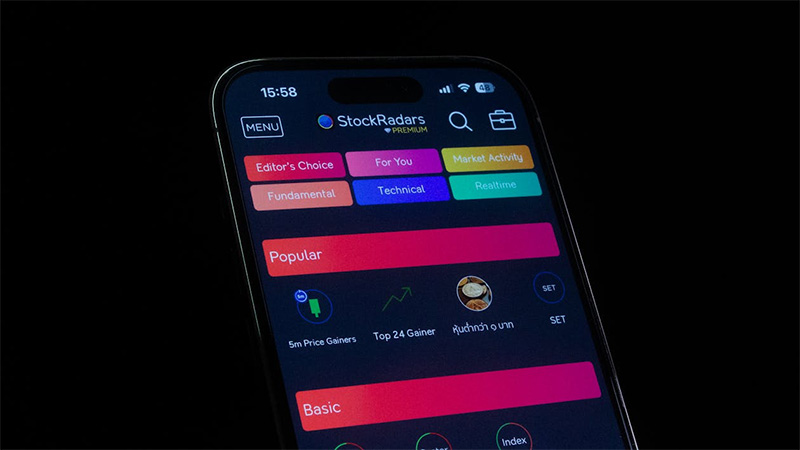
The stock market gets treated like a casino by amateurs and like a religion by zealots. Both camps miss the point. A stock market is a public meeting place for prices, a loud one, where ownership claims in companies change hands all day long. Shares represent slices of a business, and the market is the ongoing argument about what those slices cost right now, not what someone hopes they cost next week. What this truly signals is a culture that prefers stories over arithmetic. Arithmetic wins.
What a Share Really Buys
A share buys a claim on a company’s future cash flows, filtered through corporate rules and the politics of boards and voting rights. It doesn’t buy a guaranteed paycheck. It doesn’t buy control, unless ownership grows large enough to matter. Common stock usually comes with voting power, which sounds grand until reality appears. Most shareholders never vote, and many can’t name the CEO. Dividends can show up, or vanish when management decides growth needs the cash more. The share still sits there, a legal receipt for partial ownership. Price moves because buyers and sellers disagree, and disagreement never takes a day off.
How Prices Move, Minute by Minute
Prices move because orders collide. A buyer names a price, a seller names a price, and the exchange matches them when the numbers meet. No match, no trade, no new price. That matching engine looks clinical, yet human emotion drives much of the order flow. News hits. A rumor spreads. An earnings report lands like a brick. Traders rush in, long-term investors yawn, algorithms scalp fractions of a cent because fractions add up when volume turns huge. Liquidity matters more than most people admit. A heavily traded stock absorbs big orders with less drama. A thinly traded stock can lurch on a single large trade.
Indexes, Funds, and the Crowd’s Mirror
Indexes exist to summarize chaos. The S&P 500 tracks large American companies and often stands in for “the market,” which already tells a lie by omission. Small caps, foreign firms, bonds, and private businesses live outside that headline number. Funds then copy or interpret indexes. Index funds aim to match an index, not outsmart it, and they often beat most active managers anyway. That fact irritates the high-fee crowd. Mutual funds pool money and trade at end-of-day pricing. ETFs trade all day like stocks. The crowd loves simplicity, so the crowd buys funds. The market becomes a mirror reflecting popularity.
Risk, Return, and the Nonnegotiable Trade
Risk never disappears. It changes costumes. Stock investors face business risk, competition risk, interest-rate risk, and human folly risk. Higher expected return usually demands higher uncertainty, and anyone promising rich returns without stomach-churning swings sells perfume, not finance. Diversification reduces company-specific blowups by spreading exposure, yet it can’t erase market-wide drops. Time helps, until it doesn’t, because time can include recessions, wars, and policy mistakes. Valuation matters, even if memes try to outlaw it. Paying too much for earnings can turn a great company into a bad investment. Paying a fair price for a decent company can work. The trade stays nonnegotiable.
A basic understanding of the stock market starts with refusing the cartoon version. Stocks aren’t lottery tickets. They aren’t moral badges. They are ownership claims priced through bargaining, and that bargaining reflects information, fear, greed, liquidity, and boredom on a Tuesday afternoon. People chase forecasts because certainty feels good. Markets punish that habit. A better stance treats investing as a long experiment in discipline. Learn what a share represents. Notice how trading mechanics shape price. Respect the role of indexes and funds, since most money now moves through them. Accept risk as the admission fee. The market doesn’t hand out trophies. It hands out results.
Photo Attribution:
1st & featured image by https://www.pexels.com/photo/mobile-stock-trading-app-interface-display-28682353/
2nd image by https://www.pexels.com/photo/photo-of-person-holding-white-printer-paper-6802043/